Understanding Australia's Three School Sectors
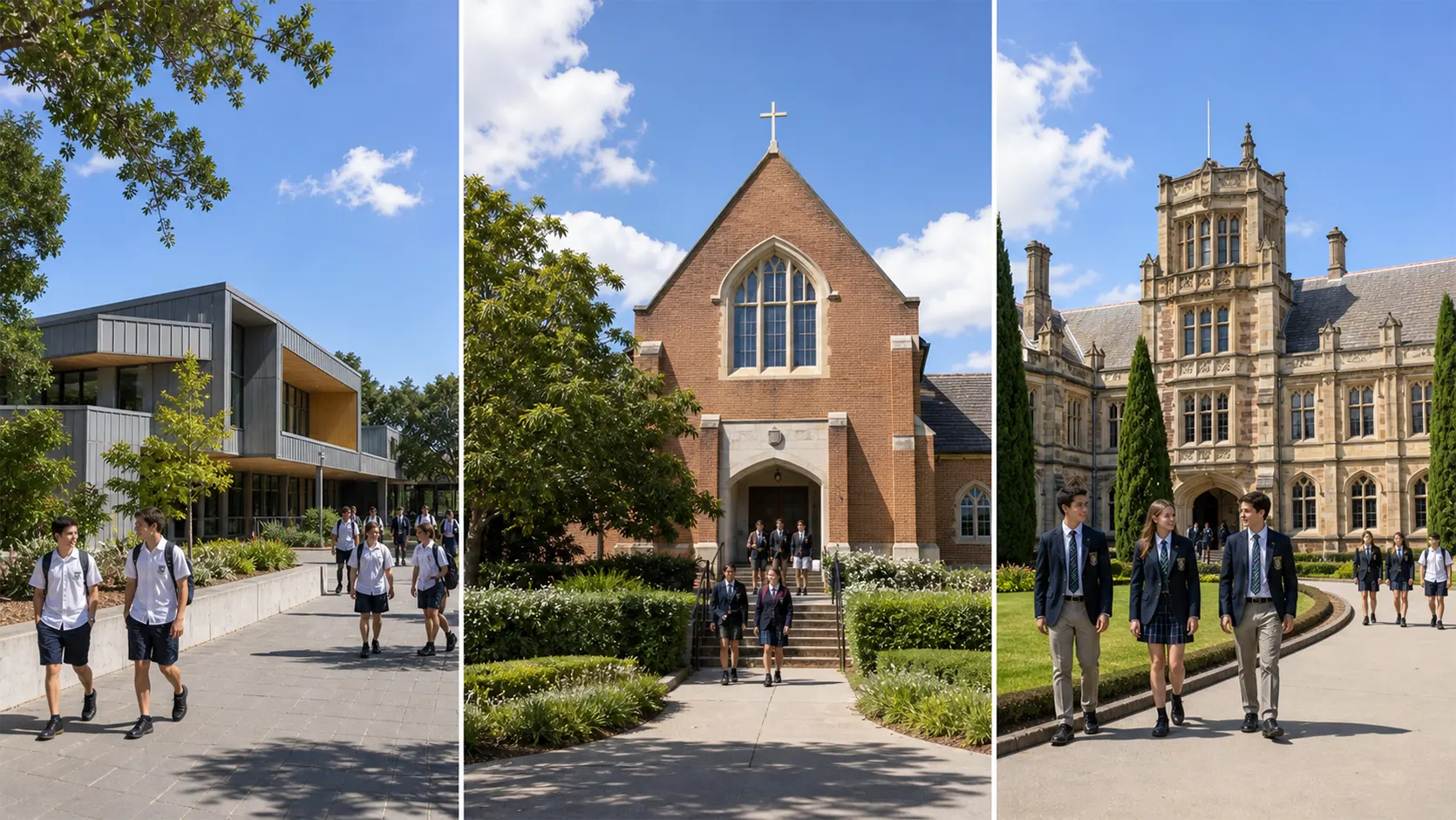
One of the first decisions every Australian family faces is which school sector to choose for their child. Australia has three distinct school sectors, each operating under different governance, funding models and educational philosophies:
- Government schools (also called public schools or state schools)
- Catholic schools (systemic Catholic and independent Catholic)
- Independent schools (private, non-government schools of all types)
Together, these sectors encompass more than 9,500 schools and over 4 million students across Australia. Understanding the real differences — beyond the myths — is essential to making the best decision for your child and your family.
Government (Public) Schools
Who Runs Them?
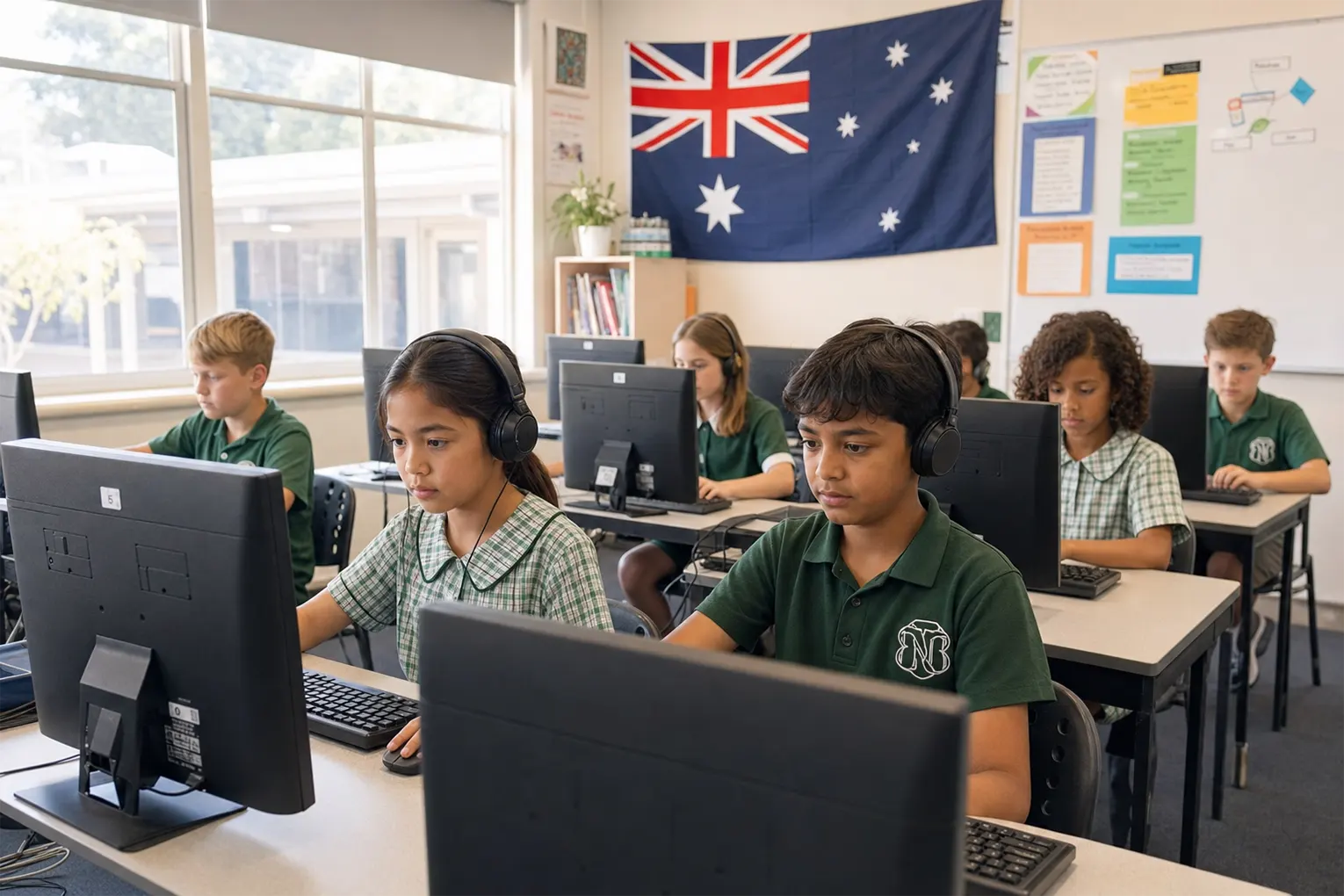
Government schools are operated and funded by state and territory governments. Each state has its own Department of Education that oversees curriculum delivery, teacher employment, and school policy. In Australia, approximately 65% of students attend government schools — making it by far the most common choice.
Fees and Costs
Government schools are free for Australian citizens and permanent residents. There are no tuition fees; however, schools may request voluntary contributions from families to support resources and programmes. These typically range from AUD $50–$400 per year depending on the school and state.
Additional costs include:
- Uniforms: AUD $150–$400 per year
- Excursions and camps: AUD $100–$600 per year
- School-supplied technology (some states): AUD $0–$300/year
- Subject levies in senior school: AUD $100–$500/year
Curriculum
All government schools follow the Australian Curriculum (or state-specific adaptations), ensuring a consistent standard of education nationwide. Teachers are accredited professionals employed by the state education department.
Enrolment
Most government schools have defined catchment zones based on your residential address. You are entitled to a place at your local school. Enrolment outside your zone is possible but subject to availability. Selective government schools (in NSW, VIC and WA) require a separate competitive entrance test.
Key Strengths
- Free or very low cost
- Reflects the diversity of the local community
- Strong inclusive education frameworks (EAL/D, learning support, gifted programmes)
- Many high-performing schools, particularly selective schools
- No religious obligation
Catholic Schools
Who Runs Them?
Catholic schools are operated by Catholic dioceses and religious orders across Australia. They represent the largest non-government school sector, educating approximately 20% of Australian students. There are two types:
- Systemic Catholic schools: Part of a diocesan system (e.g., Catholic Education Melbourne, Catholic Education Diocese of Parramatta). These are more affordable and widely accessible.
- Independent Catholic schools: Schools like Loreto, Xavier College or Marist schools that operate independently of the diocesan system but still identify as Catholic.
Fees and Costs
Catholic school fees vary significantly between schools and dioceses:
- Systemic Catholic schools: AUD $1,500–$6,000/year in tuition plus levies
- Independent Catholic schools: AUD $8,000–$25,000+/year
Government subsidies help keep systemic Catholic school fees lower than fully independent schools. Many Catholic schools also offer means-tested fee concessions and payment plans.
Curriculum and Ethos
Catholic schools follow the Australian Curriculum but integrate Catholic values and religious education into their programmes. Students attend Religious Education (RE) classes and participate in school Masses, liturgies and community service. The emphasis on care for others, social justice and character development is central to the Catholic school experience.
Enrolment
Catholic schools have their own enrolment processes. You do not need to be Catholic to apply — but Catholic families and those who share Catholic values are generally prioritised, particularly at popular schools. Some schools request a baptism certificate or letter of support from a local priest.
Key Strengths
- More affordable than most independent schools
- Strong community and values focus
- Emphasis on pastoral care and student wellbeing
- Good balance between academic rigour and character development
- Open to students of all faiths
Independent (Private) Schools
Who Runs Them?
Independent schools are governed by their own boards of directors and operate outside the government and Catholic diocesan systems. They represent approximately 15% of Australian students and include an enormous variety of school types:
- Elite GPS (Great Public Schools) schools in each state
- Anglican, Lutheran, Uniting Church and other Christian schools
- Jewish schools, Islamic schools, Steiner schools, Montessori schools
- Non-denominational independent schools
- Single-sex schools (boys-only or girls-only)
- International Baccalaureate (IB) schools
Fees and Costs
Independent school fees are the most variable of any sector:
- Lower-fee independent schools: AUD $4,000–$10,000/year
- Mid-range independent schools: AUD $12,000–$22,000/year
- Elite GPS schools: AUD $30,000–$45,000+/year
At elite schools, compulsory extras (building levies, co-curricular fees, camps, uniforms, devices) can add AUD $5,000–$15,000/year on top of base fees.
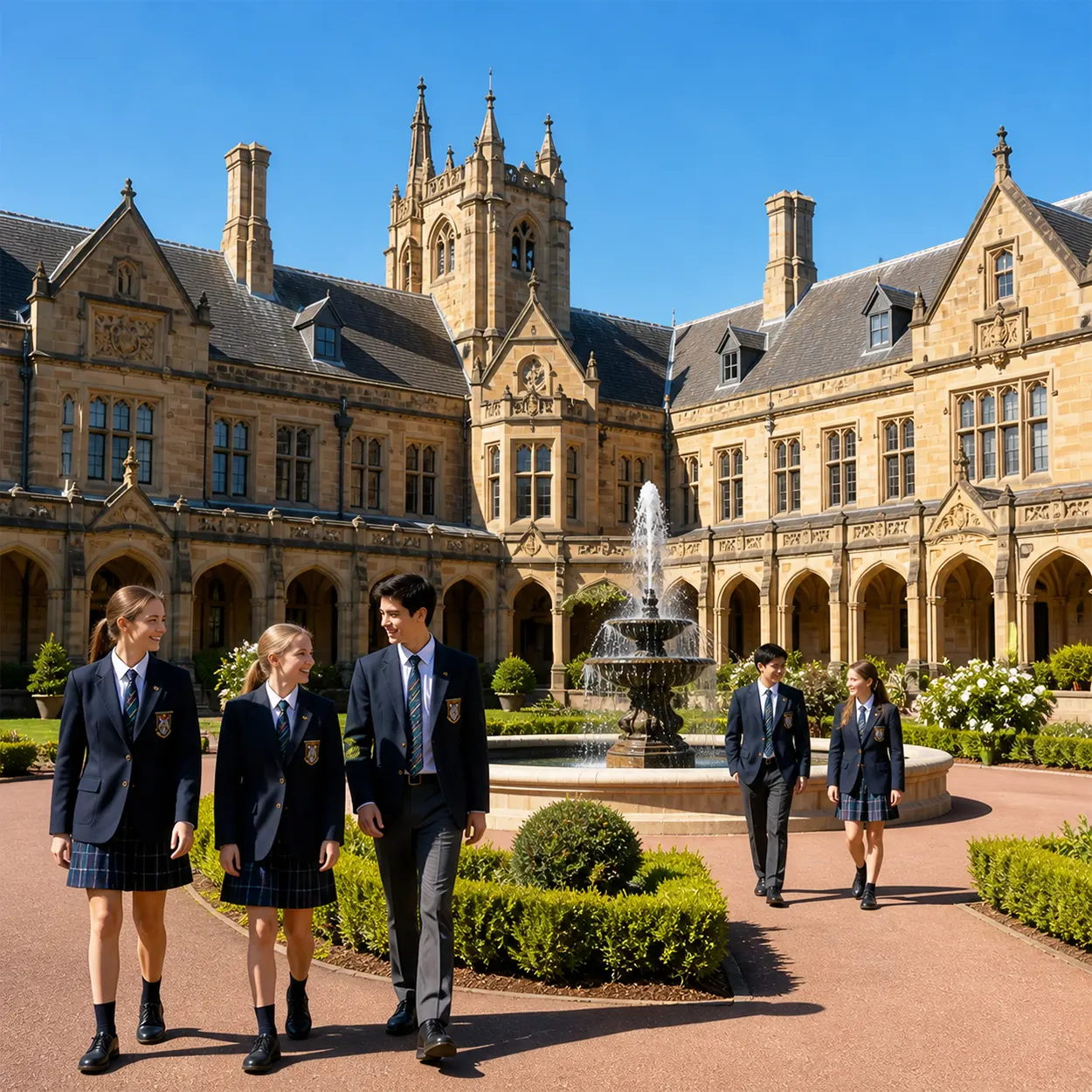
Curriculum and Ethos
Independent schools follow the Australian Curriculum but often offer enriched or extended programmes. Many offer the International Baccalaureate (IB) as an alternative to state-based senior certificates. Schools typically promote their own distinct ethos — whether that is academic excellence, sporting achievement, the arts, faith formation or entrepreneurship.
Enrolment
Independent schools manage their own enrolment processes. Popular schools may have waiting lists of 2–5 years — in some cases, families register their child at birth. Entry to selective independent schools typically involves an academic assessment, interview and/or reference from a primary school teacher.
Key Strengths
- Extensive facilities (pools, theatres, science labs, sports fields)
- Wide range of co-curricular activities
- Strong alumni networks
- Smaller class sizes at premium schools
- Specialised educational programmes (IB, STEM academies, arts pathways)
Side-by-Side Comparison: The Facts
| Factor | Government | Catholic | Independent |
|---|---|---|---|
| Annual Fees (approx.) | Free + voluntary contributions | AUD $1,500–$25,000 | AUD $4,000–$45,000+ |
| Curriculum | Australian Curriculum | Australian Curriculum + RE | Australian Curriculum / IB |
| Religious focus | None (secular) | Catholic values and faith | Varies widely (secular to religious) |
| Enrolment basis | Catchment zone | Catholic priority, open to all | Own criteria (academic, faith, waitlist) |
| Government funding | Fully government-funded | Government + private fees | Partial government + fees |
| Class sizes | ~25–30 students | ~22–28 students | ~15–25 students (varies) |
| Co-curricular | Good (varies by school) | Good, community-oriented | Extensive at premium schools |
| Student diversity | Highest (reflects community) | Moderate | Lower (socioeconomic homogeneity) |
How to Choose the Right School Sector
The right school sector for your family depends on a combination of practical, financial and values-based considerations. Work through these key questions:
1. What Is Your Budget?
Be honest about what you can sustainably afford over 13 years of schooling (Prep to Year 12). A family stretching to afford private school fees may find the financial stress outweighs the educational benefits. Government schools offer excellent education at no cost.
2. What Are Your Values?
If faith formation and a values-based education are important to your family, Catholic or faith-based independent schools may align more closely with your goals. If you prefer a secular environment focused purely on academic and social development, a government or non-religious independent school may be the better fit.
3. What Are Your Child's Needs?
Consider your child's learning style, social needs and aspirations:
- A child with learning difficulties may thrive in a smaller independent school with strong learning support
- A gifted child may benefit from a selective government school or academically rigorous independent school
- A socially anxious child may prefer the familiar community of a local government school
- A sporty or musically talented child may flourish at a school with specialist programmes in those areas
4. What Is the School's Culture?
Visit each shortlisted school in person. Notice:
- How students interact with each other and with staff
- Whether students seem engaged and happy
- How the principal speaks about their vision for the school
- Whether the values of the school align with your family's values
Remember: a school's sector tells you almost nothing about its culture. A welcoming, high-performing government school can offer more than an expensive private school with a toxic competitive culture — and vice versa.
What About NAPLAN Results by Sector?
It is a common assumption that private schools have better academic outcomes than government schools. The data is more nuanced:
- When controlled for socio-educational advantage (ICSEA), many government schools perform as well as or better than private schools with similar student profiles.
- The highest-performing individual schools in most states are selective government schools (e.g., James Ruse in NSW, Perth Modern in WA).
- Elite independent schools tend to perform well on raw NAPLAN scores partly because they draw from high-ICSEA communities — not solely because of school quality.
For a deeper understanding of how to read NAPLAN data, see our guide: How to Use the MySchool Website.
Frequently Asked Questions
Are private schools in Australia better than public schools?
Not necessarily. Academic outcomes depend on many factors beyond the school sector, including teaching quality, individual student effort and family support. Many government schools consistently outperform private schools in NAPLAN results when socio-educational background is accounted for. The best school is the one that fits your child's individual needs, values and learning style.
Do you have to be Catholic to attend a Catholic school in Australia?
No. Catholic schools in Australia enrol students of all faiths. However, Catholic families and those who share Catholic values are generally prioritised in the enrolment process. Some Catholic schools may require a baptism certificate or pastoral reference for enrolment priority.
How much do private schools cost in Australia?
Private (independent) school fees in Australia range from approximately AUD $4,000 per year at lower-fee independent schools to over AUD $45,000 per year at elite GPS schools in Sydney and Melbourne. Additional costs for uniforms, excursions, technology and extracurricular activities can add significantly to the annual total.
Can I choose any government school in Australia?
Generally, government schools have catchment zones based on your residential address. You are guaranteed a place at your local zoned school. To enrol outside your zone, you need to apply for a placement and may be placed on a waiting list if the school is at capacity.
What is the difference between a Catholic school and an independent school?
Catholic schools are operated by Catholic dioceses and follow Catholic values while receiving partial government funding. Independent schools are privately governed by their own boards and include a wide range of religious, non-religious, single-sex and co-educational schools. Independent Catholic schools (such as Loreto or Xavier) sit between the two — they are Catholic in identity but independently governed.
Find and Compare Schools in Your Area
Search government, Catholic and independent schools across Australia — filter by location, type, sector and education level.
Search Australian Schools →