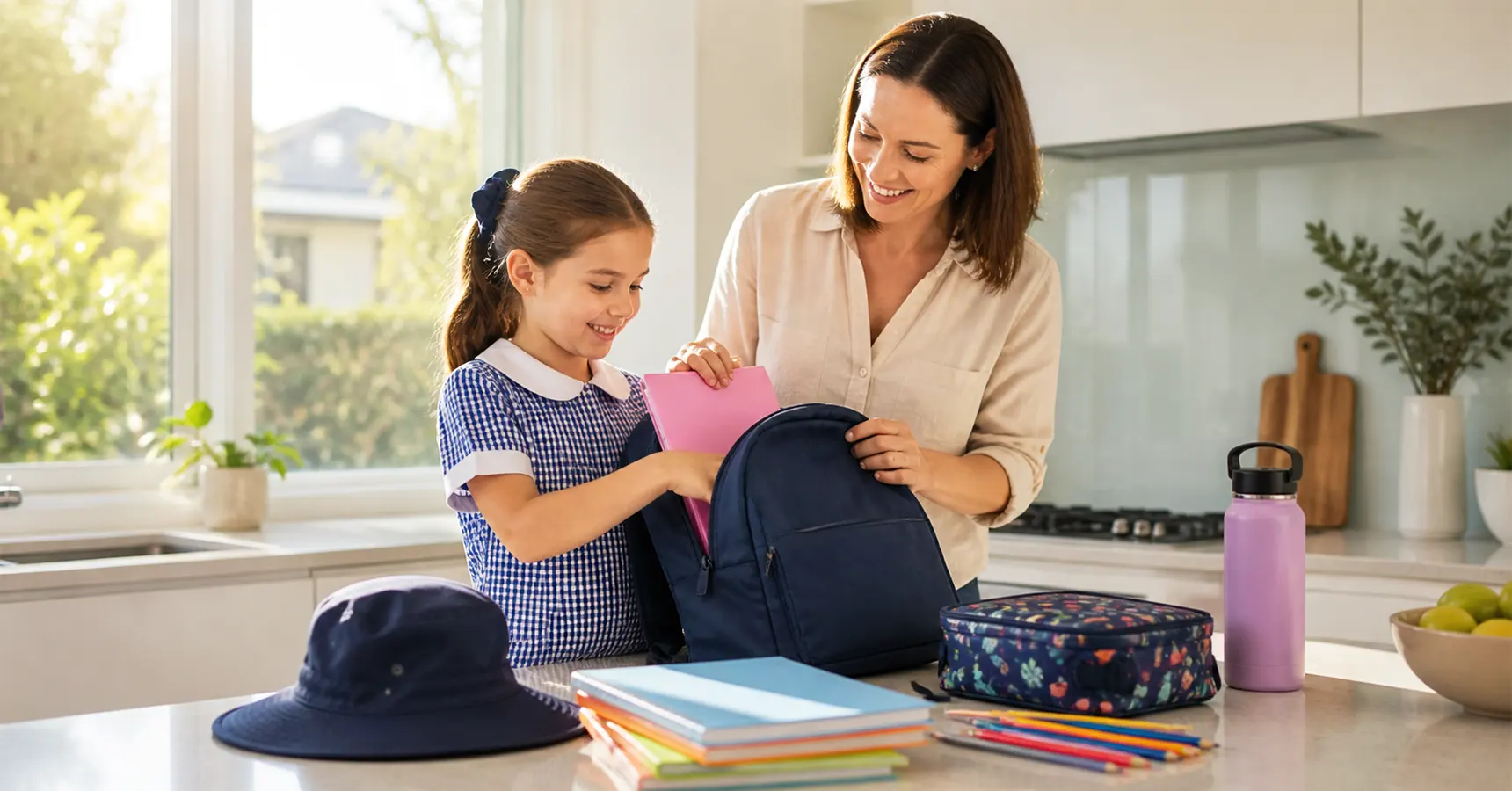
The long Australian summer is pure magic — beach days, backyard cricket, late-night ice creams, and no alarm clocks. But as late January arrives, the familiar mix of excitement and mild dread sets in for families across the country. The new school year is almost here.
Whether your child is starting Prep or Kindy for the very first time, entering the critical Year 10 stretch, or transitioning into junior secondary, getting ahead of the preparation by two to three weeks makes an enormous difference. Scrambling the night before Day One is not just stressful — it sets the wrong tone for the year ahead.
We've built this complete, practical back-to-school checklist specifically for Australian families, covering everything from uniform audits to emotional wellbeing. Work through it section by section, and you'll hit the first day of February feeling calm and completely ready.
The Australian school year starts in late January or early February, depending on your state. NSW and ACT typically start around 28–30 January, while VIC, QLD, WA, SA, and TAS often start in the first week of February. Check your school's exact date on their website or via their communication app.
1. The School Uniform Audit
Australian schools are famous — some would say notorious — for their strict uniform policies. A few weeks before school starts, drag last year's uniforms out of the wardrobe and do a thorough fitting session. Children grow surprisingly fast over an Australian summer.
What to Check Item by Item
- Summer uniform (dresses, shorts, short-sleeved polo tops): Do they still fit? Check for stains, broken zips, and whether hemlines are still within school guidelines. Many schools issue warnings for uniform violations in the first week.
- School shoes: Most Australian schools require traditional, plain black leather lace-up or velcro shoes — not canvas sneakers. Do a proper fit test. Allow a full thumb-width of space at the end of the longest toe. Growing feet need room, but shoes that are too large cause trips and blisters.
- Sports uniform / PE kit: Check trackpants, sports shorts, and any house-coloured polo shirts. Sports sneakers should fit well and have adequate support — they're worn for multiple hours each week.
- School bag / backpack: Empty it completely from last year. Check for broken zippers, worn straps, and mysterious crumbs. A bag that's too heavy or ill-fitting causes real spinal strain over a 200-day school year.
- Labels on everything: This cannot be overstated. Everything must be named. Use iron-on labels, sew-in tags, or a quality permanent fabric marker. The average primary school's lost property bin is a graveyard of unlabelled jumpers, hats, and drink bottles.
School uniforms can cost $200–$500 per child when bought new. Check your school's P&C (Parents and Citizens) Association — most run a second-hand uniform shop either at the school or online. Items are often in excellent condition and cost a fraction of the retail price. Check school Facebook groups too.
2. Sun Safety: The "No Hat, No Play" Rule
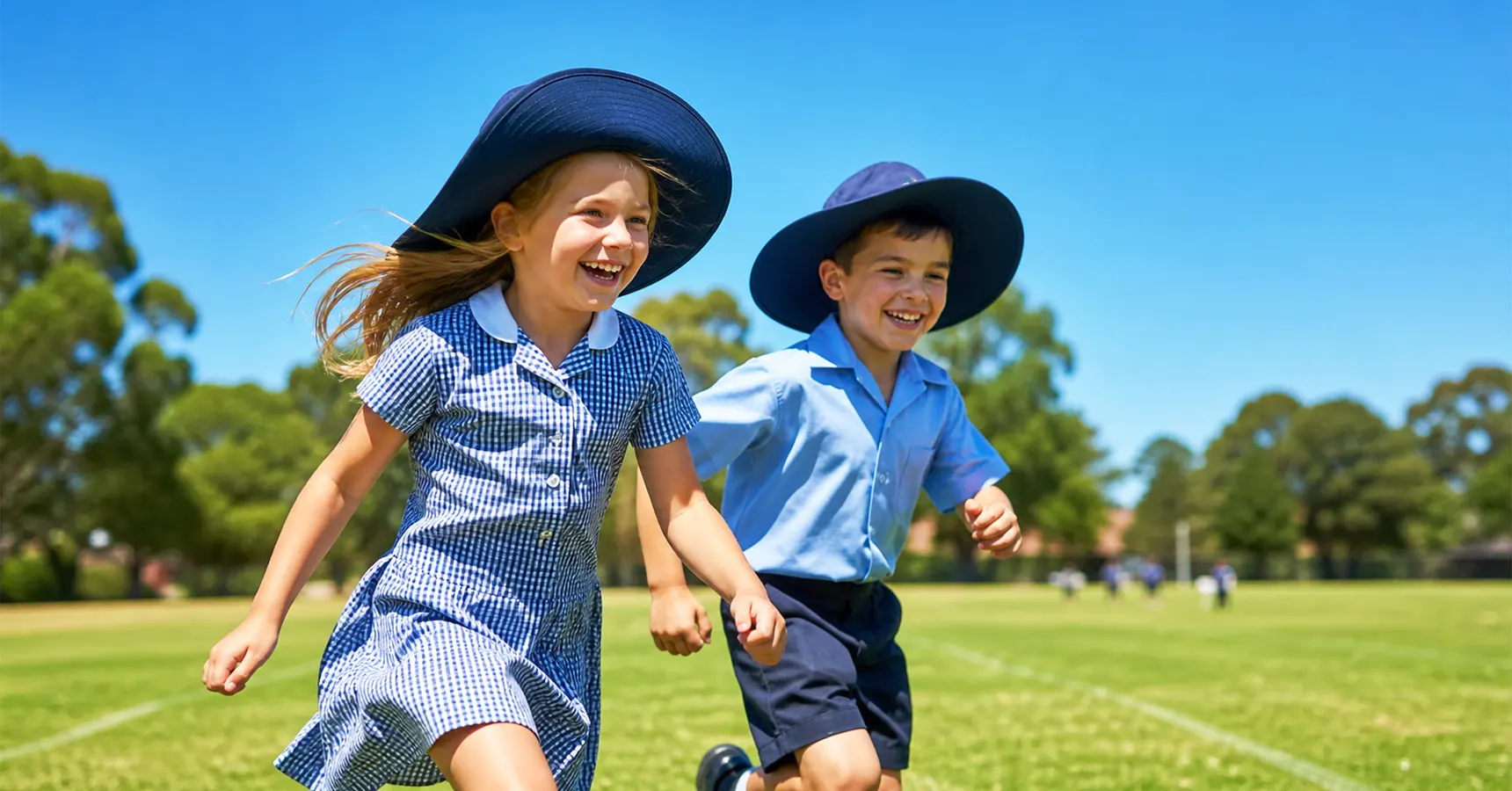
Term 1 falls squarely in the peak of the Australian summer. UV levels frequently hit the "Extreme" or "Severe" category — often reaching their highest point by 9:00am. Australian schools take sun safety with genuine seriousness, and so should you.
The "No Hat, No Play" policy is enforced in the overwhelming majority of Australian primary schools. The rule is simple: if your child does not have a school-approved hat at recess or lunch, they must stay in a designated shaded area and cannot play in the open. For an energetic 7-year-old, this is a genuine social and physical punishment.
| Hat Type | School Policy |
|---|---|
| Wide-brimmed hat (min. 7.5cm brim) | ✅ Accepted at most schools |
| Bucket hat (full coverage) | ✅ Often accepted — check your school's policy |
| Legionnaire hat | ✅ Accepted and provides excellent neck protection |
| Baseball cap / snapback | ❌ Rarely accepted — insufficient neck coverage |
Pro tip: Buy two. Keep one permanently at the bottom of the school bag. You can thank us in February when the first one inevitably disappears.
Also pack a roll-on or spray sunscreen (SPF 50+) in your child's bag and teach them to apply it before going outside. Many schools have "Sunsmart" policies requiring students to apply sunscreen before outdoor activities.
3. Booklists and Stationery
Unlike many countries where schools supply all materials, Australian parents are generally expected to purchase their child's stationery. You should have received a Booklist from the school at the end of Term 4.
| School Level | How Stationery Is Typically Handled |
|---|---|
| Prep / Kindy / Foundation | Schools often charge a Resource Levy ($50–$150) and buy supplies in bulk for the whole class. You may only need to label a pencil case and provide headphones. |
| Primary (Years 1–6) | Parents buy from a specific booklist. Every item must be individually labelled — yes, including each pencil and coloured marker. |
| Secondary (Years 7–10) | Students buy subject-specific exercise books, folders, and calculators. Organisation is key — a 4-subject notebook won't cut it in high school. |
| Senior Secondary (Years 11–12) | BYOD (Bring Your Own Device) laptops become mandatory at most schools. A reliable laptop with the required specs is often the single most important purchase. |
Buy booklist items in mid-to-late January. If you wait until the week before school, popular items sell out fast. Big W, Officeworks, and Target all stock common booklist items and price-match each other. Officeworks also offers a price beat guarantee on stationery.
4. Lunchboxes, Nutrition and Hydration
Most Australian schools do not operate a cafeteria-style lunch service. While almost every school has a tuckshop or canteen open one to three days a week, the packed lunch is a daily reality for the vast majority of students.
Building the Perfect Australian School Lunchbox
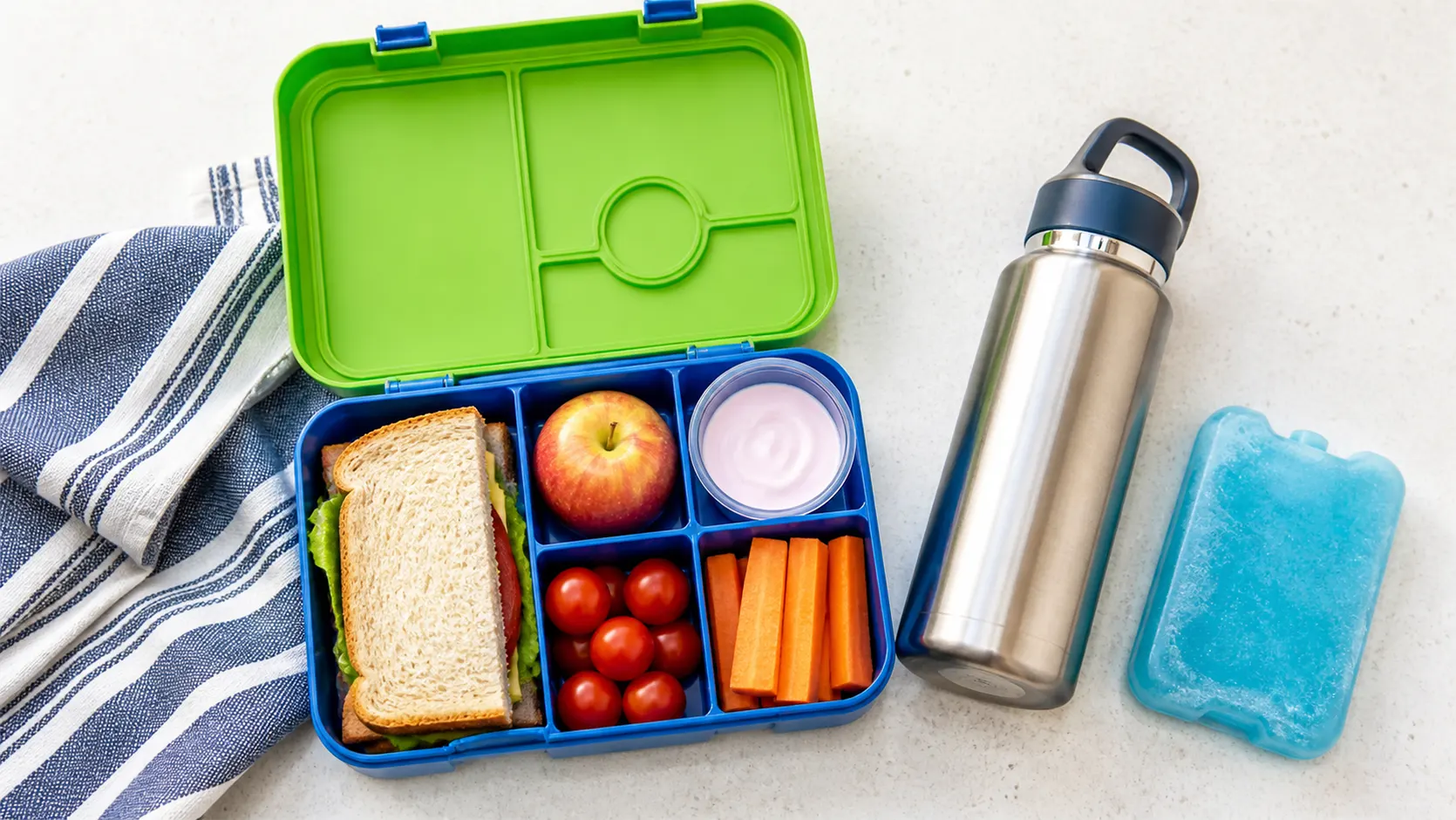
- The box itself: Bento-style lunchboxes with multiple compartments are extremely popular. They encourage "nude food" packing (no single-use wrappers), which many schools actively encourage or even require for environmental reasons.
- Insulation is non-negotiable in Term 1: February heat can reach 38°C+. An insulated lunch bag with a reusable ice brick will prevent your sandwiches from becoming a food safety hazard by morning recess.
- The water bottle: A large (800ml–1L) insulated stainless steel drink bottle is ideal. It will keep water cold all day even in extreme heat. Hydration is directly linked to concentration and energy levels.
- Crunch & Sip portion: Most primary schools have a mid-morning "Crunch & Sip" or "Brain Break" during which children eat fresh fruit or vegetables at their desks. Pack this separately in a small, easy-open container your child can manage independently.
The vast majority of Australian primary schools are designated "Nut-Aware" or "Nut-Free" zones due to the risk of anaphylaxis in students with severe allergies. Never pack peanut butter sandwiches, Nutella, nut-based muesli bars, or trail mix. Check the label of every packaged snack you include. Violations can have serious consequences for other children.
5. Re-Establishing the Routine Two Weeks Early
The shift from sleeping until 9am and staying up until 10pm to a rigid 7am wake-up and 8:30am school drop-off is a physiological shock for children — and for parents. Do not try to fix this overnight.
Start the transition at least 10 to 14 days before school begins:
- Move bedtime back by 15 minutes every two nights.
- Set a consistent morning alarm and start running through the morning routine: wake up, dressed, breakfast, teeth, bag packed, out the door.
- Reintroduce screen-free wind-down time before bed.
- Ensure your child is getting the right amount of sleep: 9–11 hours for primary school age, 8–10 hours for secondary.
The first week back is exhausting even for the most resilient kids. An overtired child struggles to learn, regulate emotions, and make friends — none of which you want in the first week of a new school year.
6. Administration, Paperwork and Digital Setup
The administrative side of the school year is easy to overlook but critical to get right before Day One.
- Medical Action Plans: If your child has asthma, anaphylaxis, diabetes, or another medical condition, you must provide an updated Medical Action Plan (signed by your GP or specialist) to the school office before the first day. Emergency medication (EpiPens, Ventolin inhalers) must also be supplied and must be within their expiry date.
- School communication apps: Download and log in to your school's parent communication platform. Common ones include Compass, Sentral, Seesaw, Audiri, and Skoolbag. Make sure notifications are enabled — this is how schools communicate absences, excursion notes, and emergency alerts.
- Transport arrangements: Do you have the bus pass sorted? Do you know the exact drop-off and pick-up zones and their times? School zones have strictly enforced 40km/h speed limits — police and council rangers issue significant fines. Know the rules before you drive in on Day One.
- Voluntary school contributions: Many public schools request a voluntary financial contribution of $50–$200 at the start of the year. While genuinely voluntary, this funding directly supports programs and resources, so consider contributing if you can.
7. Emotional Preparation: The Most Overlooked Checklist Item
You can have the perfect lunchbox, a pristine uniform, and every book on the list — and still have a child who falls apart on the first morning. Emotional preparation is just as important as the physical checklist, and it requires consistent conversation over several weeks, not a single pep talk the night before.
Strategies by Age Group
- Prep/Kindy starters: Visit the school beforehand if possible. Walk to the classroom, find the toilets, meet the teacher at an orientation session. Familiar environments dramatically reduce first-day anxiety.
- Primary school students changing classes: Talk about the excitement of a new teacher and new friendships. Remind them that every single child in their class is feeling the same mix of nerves and excitement.
- Secondary school students (especially Year 7): Validate their nervousness. Getting lost on a big campus, not knowing anyone in your class, and managing a locker for the first time are genuinely stressful. Role-play scenarios. Talk about what to do if they're unsure where to go.
"After 15 years in Australian classrooms, I can tell you that the children who settle fastest aren't necessarily the most confident — they're the ones who arrived well-rested, with a full stomach, and with parents who had spoken positively and calmly about the year ahead. The emotional preparation you do at home shapes how your child walks through the gate on Day One."
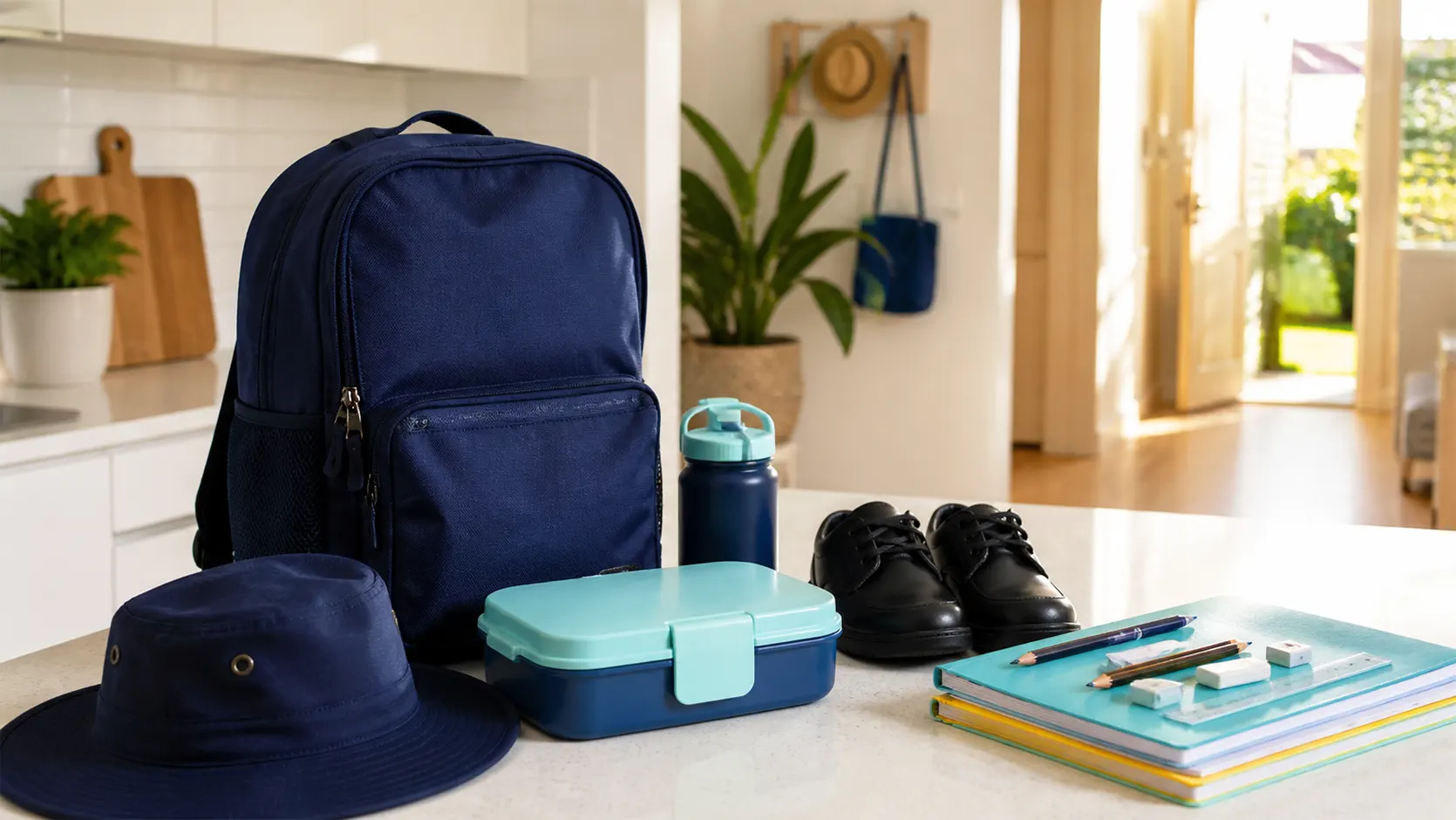
The Complete Back-to-School Checklist at a Glance
| Category | Action | Done? |
|---|---|---|
| Uniforms | Try on all uniform items, replace anything too small or worn | ☐ |
| Uniforms | Label every single item with your child's full name | ☐ |
| Uniforms | Buy second-hand if possible (P&C shop or Facebook groups) | ☐ |
| Sun Safety | Purchase two school-approved wide-brimmed hats | ☐ |
| Sun Safety | Pack SPF 50+ roll-on sunscreen in the school bag | ☐ |
| Stationery | Buy all items on the school booklist (mid-January) | ☐ |
| Stationery | Label all stationery items | ☐ |
| Lunchbox | Buy an insulated lunch bag and ice brick | ☐ |
| Lunchbox | Buy a large insulated water bottle | ☐ |
| Lunchbox | Check all lunch items for nut ingredients | ☐ |
| Routine | Begin shifting bedtime 2 weeks before school starts | ☐ |
| Routine | Run a full morning routine "practice run" | ☐ |
| Admin | Submit updated Medical Action Plans and medication | ☐ |
| Admin | Download and log into the school's communication app | ☐ |
| Admin | Confirm transport/drop-off arrangements | ☐ |
| Emotional Prep | Visit the school campus before Day One if possible | ☐ |
| Emotional Prep | Have positive, specific conversations about the year ahead | ☐ |
Finding the right school is the first and most important step in setting your child up for success. Use our School Search tool to compare schools by state, type, and performance — whether you're looking for a local government school or a specialist Victorian, NSW or Queensland school.
